Blog Post
Inside the APA Study: What the Journal of Psychotherapy Integration Actually Found
July 17, 2026
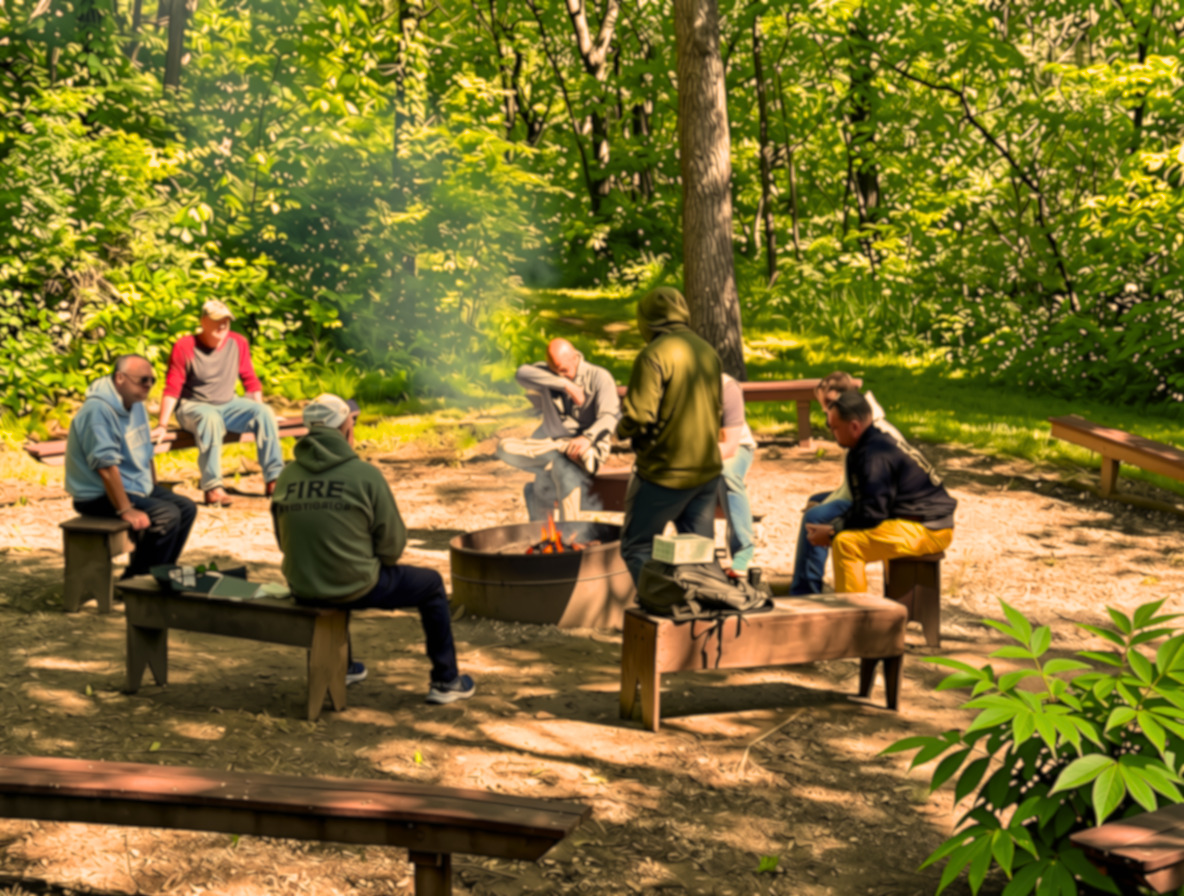
Last week I said our program was featured in a peer-reviewed APA journal. Here’s what that study actually found, methodology, numbers, and all.
The Study
In 2023, the Journal of Psychotherapy Integration, a peer-reviewed publication of the American Psychological Association, published “Feasibility of Multimodal Group Treatment for Veterans With PTSD, Depression, and High-Risk Drinking: A Pilot Study,” by Dr. Bruce Liese (University of Kansas Medical Center) and Corey Monley (University at Albany, SUNY) (Liese & Monley, 2023).
Participants were recruited through our program website. 139 veterans, spanning Gulf War, Iraq and Afghanistan, and Vietnam era service, gave informed consent and completed pretreatment surveys between 2016 and 2019. Fifty of them completed a posttreatment follow-up survey an average of two years after finishing the program, which is what let researchers measure whether the changes actually held.
What the Program Actually Is
This isn’t a retreat or a wellness weekend. Researchers call it a Multimodal Group Treatment, or MMGT, a manualized 5-day, 4-night program with cohorts of 4 to 18 veterans, onsite, barracks-style lodging and mess hall dining (Liese & Monley, 2023). The goal is to replicate the camaraderie of military life, then use that trust to do the work.
Three clinical modalities, integrated into one program:
- Cognitive-behavioral therapy (CBT): roughly 10 hours, helping veterans understand the relationship between their thoughts, feelings, and behaviors
- Mindfulness-based therapy (MBT): roughly 3 hours a day, including MBSR, breathing meditation, and yoga, teaching veterans to attend to their emotions without judgment
- Emotion-focused therapy (EFT): experiential work, including two signature activities, Ceremony for the Dead and Leap of Faith, built to help veterans process grief, fear, and shame directly
Each modality is well-studied on its own. CBT shows the largest effect sizes of any PTSD treatment (Bisson et al., 2007; Cusack et al., 2016). Mindfulness-based approaches reduce dropout but show more modest symptom relief alone (Gallegos et al., 2017). EFT is emotionally intensive and effective, but has historically carried higher dropout risk (Paivio et al., 2010). Combined, in a brief and intensive format, the strengths of each are meant to offset the weaknesses of the others.
Why Avoidance Is the Real Target
Here’s the part that doesn’t make it into most program marketing. Avoidance is the mechanism the whole program is built to interrupt.
Veterans with PTSD often carry schemas of defectiveness, vulnerability, or mistrust that drive an avoidant coping style, sometimes long before they ever deployed (Clark & Beck, 2011; Hall, 2011). Avoidance provides short-term relief and long-term cost. It keeps the emotion buried, and the buried emotion keeps running the show.
Mindfulness comes first, to help veterans attend to and tolerate difficult emotions instead of shutting them down. Once that tolerance is built, they’re more receptive to CBT and EFT, cognitive work to examine the thoughts underneath the avoidance, and emotional work to actually feel what’s been avoided (grief, fear, shame) instead of managing around it (Liese & Monley, 2023).
The Group Is the Treatment, Not Just the Setting
Every activity happens in a group, on purpose. The researchers point to Irvin Yalom’s group therapeutic factors, universality, cohesiveness, catharsis, instillation of hope, and modeling, as core predictors of outcome in group therapy (Yalom & Leszcz, 2020).
On the program evaluation survey, veterans rated group processes on a 7-point scale:
- Being with others with similar experiences: 6.3 (the single most helpful process)
- Altruism: 6.2
- Imparting of information: 6.2
Universality is the recognition that “I’m not the only one.” Validation is what happens when a room full of people who get it responds to your worst memory with understanding instead of judgment. Modeling is watching someone else go first, then finding you can too. Instillation of hope is what happens when you watch the person who arrived broken on day one stand up and speak on day four. That doesn’t happen the same way in individual therapy. It’s why the group format isn’t incidental to this program. It’s structural.
What the Numbers Show
- Dropout: 2.9%. Only 4 of 139 veterans left before completing the program. Published PTSD treatment dropout rates generally range from 16% to 36% depending on the population studied (Edwards-Stewart et al., 2021; Goetter et al., 2015; Lewis et al., 2020). The 36% figure comes specifically from a meta-analysis of Iraq and Afghanistan veterans, the population closest to who we serve (Goetter et al., 2015)
- PTSD symptoms (PCL-5): dropped from an average of 47.6 to 39.5, a statistically significant, moderate reduction (p < .01, d = -0.49)
- Depression (PHQ-9): dropped from 15.2 to 11.4 (p < .01, d = -0.72)
- High-risk drinking (AUDIT): dropped from 8.3 to 5.1 (p < .01, d = -0.58)
One finding surprised the researchers. Scores on a measure of moral injury, the sense of having violated one’s own values, went up, not down, after the program (d = 0.59). Liese and Monley’s explanation is worth sitting with: veterans likely became more willing to acknowledge moral injury they’d been avoiding, not because the program created it, but because it finally gave them room to name it (Liese & Monley, 2023). That’s not a failure. That’s the avoidance loop breaking open, and it’s exactly why we build ongoing support into what comes after the five days.
Why This Matters
Most veteran programs point to stories. We can point to a peer-reviewed pilot study, published by researchers with no financial stake in Warriors’ Ascent, describing our actual curriculum, our actual participants, and outcomes measured up to two years later.
That’s the difference between an anecdote and evidence. Next week: the Warrior Operating System, and how it turns what you just read into a framework we teach every cohort.
References
Liese, B. S., & Monley, C. M. (2023). Feasibility of multimodal group treatment for veterans with PTSD, depression, and high-risk drinking: A pilot study. Journal of Psychotherapy Integration. Advance online publication. https://doi.org/10.1037/int0000309
Yalom, I. D., & Leszcz, M. (2020). The theory and practice of group psychotherapy (6th ed.). Basic Books.
Clark, D. A., & Beck, A. T. (2011). Cognitive therapy of anxiety disorders: Science and practice. Guilford Press.
Goetter, E. M., Bui, E., Ojserkis, R. A., Zakarian, R. J., Brendel, R. W., & Simon, N. M. (2015). A systematic review of dropout from psychotherapy for posttraumatic stress disorder among Iraq and Afghanistan combat veterans. Journal of Traumatic Stress, 28(5), 401-409.
Gallegos, A. M., Crean, H. F., Pigeon, W. R., & Heffner, K. L. (2017). Meditation and yoga for posttraumatic stress disorder: A meta-analytic review of randomized controlled trials. Clinical Psychology Review, 58, 115-124.